(Based in part on a recent AWS post, entitled “Physical AI trades lab coat for a hard hat.”)
As AWS notes, the “latest physical AI systems perceive their surroundings, adapt to changing conditions, and make autonomous decisions in the messy, unpredictable real world. Unlike the traditional assembly-line robot executing the same welding arc a thousand times, physical AI figures things out. It responds to what it sees, adjusts to what changes, and learns from what happens next.”
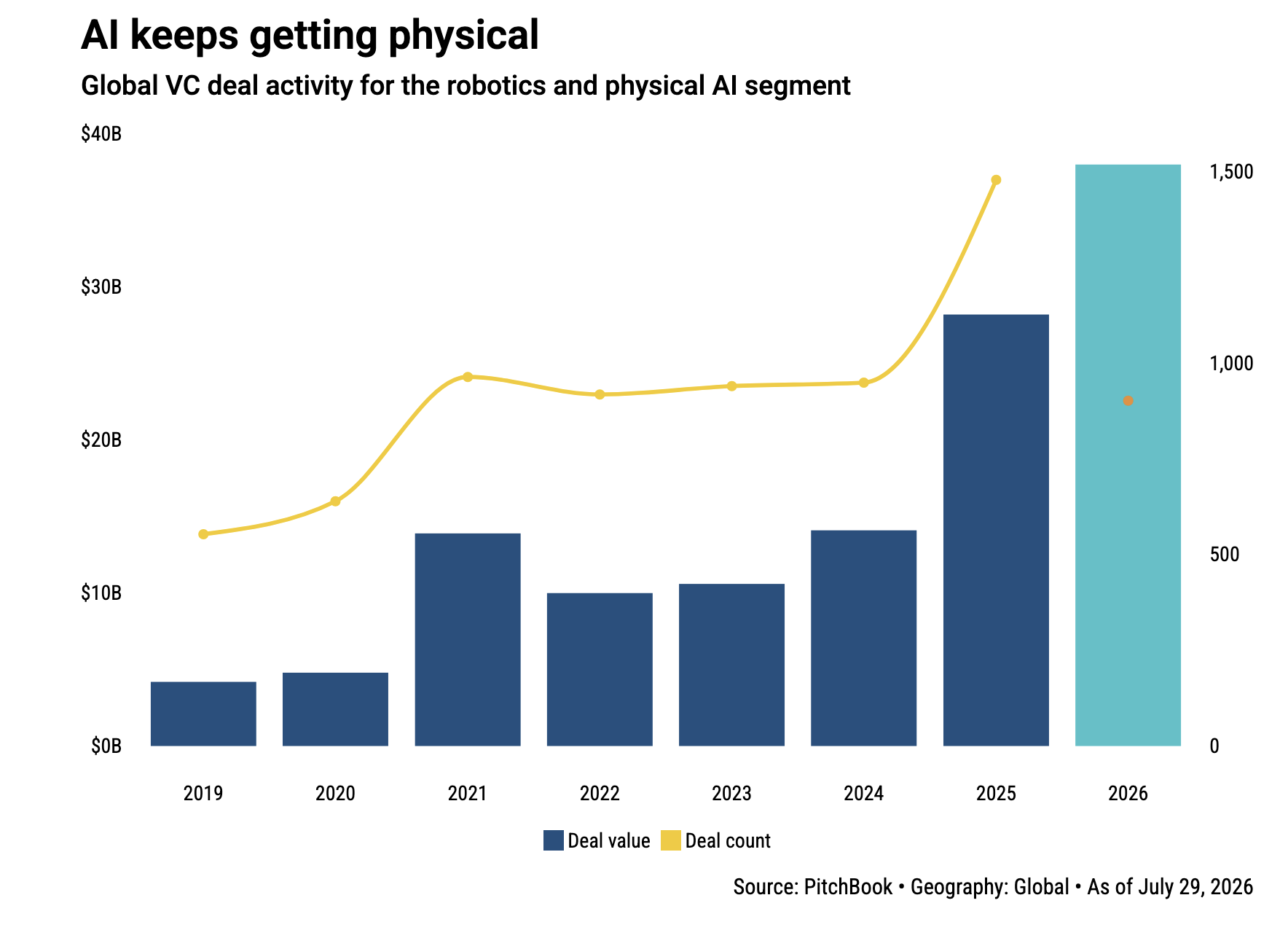
Venture capital in the physical AI space surged from $7.2 billion in 2024 to $40.7 billion in 2025, with the AI robotics sector projected to reach $124 billion by 2034. McKinsey believes the broader robotics and physical AI space will generate at least $1 trillion in economic value by 2040, an estimate included in a recent video entitled, The age of thinking machines: Perspectives on the future of robotics.
Physical AI has moved beyond research labs and into the real world, where intelligent robots are helping address one of the biggest challenges facing developed economies: a shrinking workforce. Unlike traditional industrial robots that perform repetitive, pre-programmed tasks, physical AI systems can perceive their surroundings, adapt to changing conditions, and make autonomous decisions in complex, unpredictable environments. Their growth is being fueled not only by advances in AI, but by an urgent need for workers in manufacturing, logistics, construction, agriculture, and healthcare.
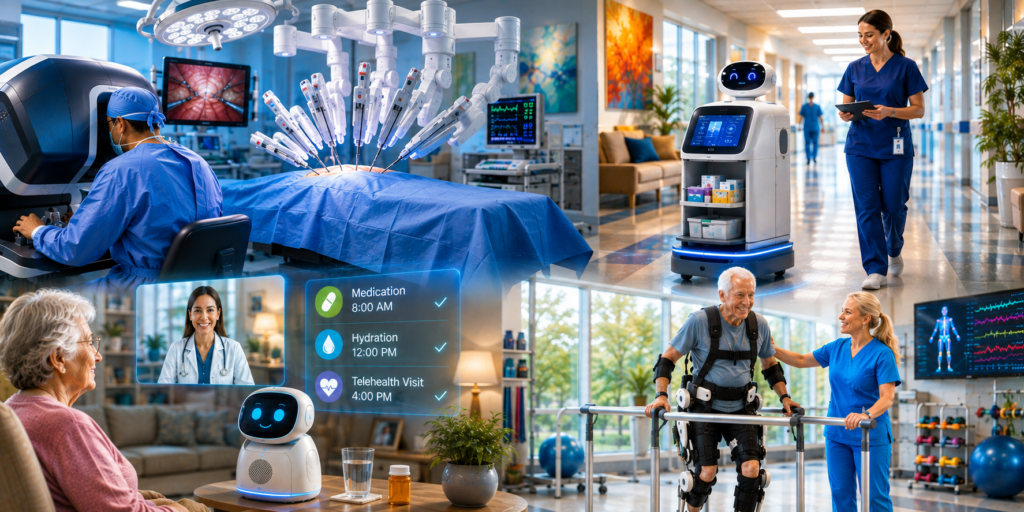
Healthcare may be one of the clearest examples of physical AI improving people’s lives.
Rather than replacing doctors and nurses, these systems are taking over routine, time-consuming tasks so clinicians can spend more time with patients. Robotic surgical systems have already assisted in more than 20 million procedures worldwide, while Diligent Robotics’ Moxi has completed more than 1.3 million deliveries inside hospitals, returning more than 600,000 hours to caregivers by handling the transport of medications, supplies, and equipment. At a time when the World Health Organization projects a global shortage of 11 million healthcare workers by 2030, technologies that improve productivity while preserving human-centered care could become increasingly important.
Here at Timmaron Group, we believe in Robotics That Support People.
Robotics should augment, not replace, the healthcare workforce. We see it having great potential in such applications as
- Home healthcare assistance
- Medication reminders and delivery
- Hospital logistics
- Supply movement
- Mobility assistance
- Fall detection
- Companion technologies
- Workforce support
The promise is that these advanced robotics systems will improve independence, safety, and quality of life while allowing clinicians to focus on higher-value patient care.
But the benefits of physical AI extend well beyond healthcare and hospitals. It is making dangerous jobs safer by deploying autonomous inspection robots in hazardous oil and gas facilities, improving efficiency and reducing workplace injuries in highly automated warehouses, and enabling autonomous heavy equipment to assist with chronic labor shortages in construction. These applications are aimed less at replacing workers than at filling positions that employers increasingly struggle to staff.
The AWS article also emphasizes that the future of physical AI is one of collaboration between people and intelligent machines. Industry experts expect automation to eliminate many of the “dull, dirty, and dangerous” aspects of work while creating new careers in robotics maintenance, AI operations, system training, and fleet management. Companies such as Amazon have already invested heavily in retraining hundreds of thousands of employees for these higher-skilled roles.
While significant technical and economic challenges remain, AWS also argues that physical AI should be viewed as a complement to the human workforce – not a replacement for it. When thoughtfully deployed, it has the potential to improve safety, expand access to healthcare, increase productivity, and help society meet growing labor shortages while allowing people to focus on work that requires judgment, compassion, and human connection.
To discuss more about robotics that support people, and receive a copy of Timmaron Group’s new Executive Summary on “Applied Intelligence for Humanity,” please email us at hi@timmarongroup.com.