
Hg, a leading private equity firm, held an executive event on February 11, 2026, which Timmaron Group CEO Barb Stinnett attended. (Hg is a partner firm.) It invests in European and transatlantic software and services businesses. With offices in London and a strong presence across North America. Hg has more than $100 billion in assets under management. Its portfolio spans more than 58 companies worth more than $185 billion in aggregate enterprise value.
This is a summary of the event.
The Hg Silicon Valley Leadership Summit 2026 – Major Themes and Takeaways:
- Agentic AI is the non‑negotiable in 2026 – Leaders at the summit agreed that AI has moved from “co‑pilots” to autonomous agentic systems. Models can now handle multi‑hour tasks and are expected to manage multi‑day projects by year‑end. Frontier engineers no longer “write code with AI” — they orchestrate fleets of agents working on parallel features and problems, while humans define problems, review outputs, and guide strategy. This shift means traditional linear productivity metrics break down – one engineer with eight agents isn’t eight times more productive but operates in a wholly new paradigm. Pearl of wisdom: organizations must restructure workflows around agents, revisit assumptions every six to twelve months, and plan in weeks or months rather than annual cycles.
- Get agent‑ready: anticipate the next bottlenecks – While AI accelerates tasks, it shifts bottlenecks downstream. In software development, code generation is no longer scarce – human comprehension and review are. This creates “comprehension debt,” where teams ship code they don’t fully understand, heightening fragility and security risks. A similar pattern appears in go‑to‑market functions: AI can generate unlimited content, but success hinges on strategy and execution quality. To cope, companies are forming go‑to‑market engineering teams that run rapid experiments, build personalized outreach, and generate quarterly business review decks in minutes. Pearl of wisdom: treat AI as a catalyst for process redesign; map workflows end‑to‑end, identify where acceleration creates pressure, and fix broken processes before layering AI.
- Talent and culture matter more than ever – Contrary to fears that AI makes people less important, the event discussion argued it amplifies talent: AI raises the productivity “floor” but raises the “ceiling” far more. The best performers become vastly more effective, widening the gap with average staff. Leaders must therefore invest heavily in high performers and be honest that some people may not adapt. Cultural friction often comes from middle management worried about losing influence. Leaders need to model experimentation, admit what they don’t know, and create psychological safety for failure. Pearl of wisdom: the key to transformation lies in cultivating a learning‑oriented culture – leaders should go first, encourage curiosity, and be prepared for differential adaptation.
- Innovation needs a new operating model – Traditional product development – long roadmaps and careful scoping – was designed for scarce coding capacity. With AI agents able to prototype features in hours, planning must invert: rapid prototyping → customer feedback → iteration. Teams should be small, autonomous, close to customers, and empowered to experiment. Building more features is easy; the challenge is ruthless prioritization around high‑value use cases and killing under‑performing initiatives quickly. Pearl of wisdom: treat innovation as a continuous experiment; prioritize outcomes over outputs, and streamline structures to enable fast pivots.
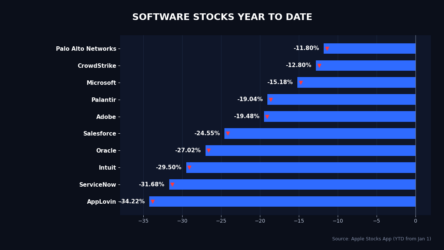
- The SaaS expansion: from workflow to work – AI lowers barriers to building custom software, letting small enterprises create tailored CRMs or HR systems in weeks. This challenges incumbents whose moats relied on complexity and integration. Yet incumbents retain distribution and domain knowledge; those that evolve can pivot from selling tools to selling outcomes delivered by AI agents. The discussion identified two strategic paths: become a platform, with API‑first architecture that lets customers and agents build on top, or deliver complete work (outcomes) priced on value. Rich contextual data is essential, as agents need more information than traditional systems of record provide. Pearl of wisdom: decide whether to be a platform or an outcome‑provider – standing still invites disruption.
- A new leadership imperative – Technology and tools are ready, but successful AI transformation hinges on leadership. Transformations require unambiguous commitment from the top and willingness to question every process and incentive. Leaders must personally use AI tools and avoid delegating understanding to specialists. Support, training, and patience are vital, but accountability is necessary; some staff may not make the transition. Pearl of wisdom: lead by example – senior executives should rebuild their own skills, embrace uncertainty, and set clear expectations that transformation is non‑optional.
Conclusion: The momentum continues – The summit stressed that the AI transformation is already underway. Organizations that restructure their operating models, invest in talent, and move decisively will gain compounding advantages. Those merely experimenting or layering AI onto existing processes will fall further behind. Final pearl of wisdom: the window for decisive action is open but not indefinite – leaders must choose which side of this widening divide they will stand on.
To discuss any of the above topics, or to get further perspective on AI transformation, schedule a call with the CEO of Timmaron Group, Barb Stinnett, by emailing us at hi@timmarongroup.com.